News / Features / Interviews / New Shows + Transfers / Lyn Gardner
Lyn Gardner Talks to Director Nicholai La Barrie as An Ideal Husband Comes to the Lyric Hammersmith
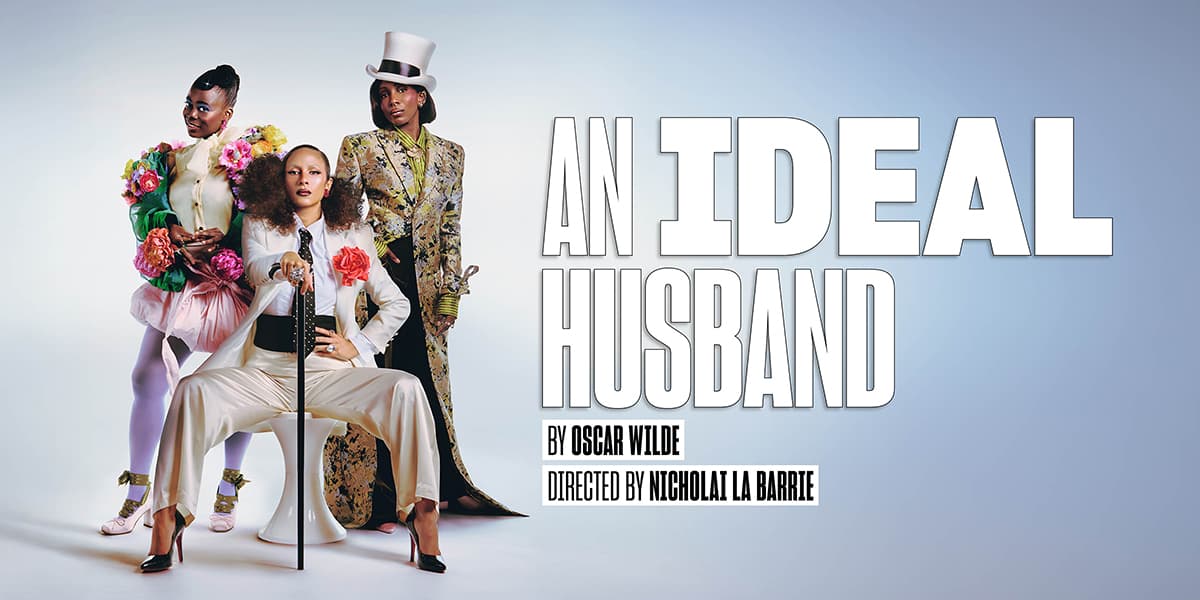
When I ask director Nicholai La Barrie, associate director of the Lyric Hammersmith, if rehearsals for his contemporary, modern-dress revival of Oscar Wilde’s An Ideal Husband have been fun, he says that when “these crazy people ask me to make a play and let me loose in a rehearsal room, my attitude is to laugh my way to the first night and see what happens.” So, yes, definitely, he and his cast are having fun with Oscar Wilde’s high Victorian classic, often presented in high Victorian style. But not here. La Barrie’s production is stylishly up to date and on the nose. You can’t help feeling that Wilde himself would have thought it fun. Not that La Barrie, whose revival lands at the Lyric exactly 100 years since it was last seen at the Hammersmith theatre, is failing to take Wilde’s play seriously. “It’s such an interesting piece, a morality play about a politician who has done something incredibly dubious in the past and who must seek forgiveness in the present.” Wilde’s play may have premiered in 1895, but in the intervening 130 years there has seldom been a time when it hasn’t hit a nerve in its depiction of the political elite. You only have to look to some recent political scandals in the UK or to watch Trump lying through his teeth to wonder, as Barrie does, "Whether we have got to a stage where politicians lie with impunity and just keep doubling down and where that sits with us as citizens and our individual morality?" Can we and should we forgive them?" La Barrie reckons that those in positions of leadership must expect to be held to higher moral standards. The situation in An Ideal Husband is this. Cabinet minister Sir Robert Chiltern is a successful career politician and one who is held in high esteem for his integrity and honesty. His wife is amongst those who idealise him. But he is not being honest because the fortune which launched his political career was made dishonestly, and a new arrival in town, the deliciously villainous Mrs Cheveley, is about to expose him. “Even you are not rich enough, Sir Robert, to buy back your past. No man is.” Wilde sets up a fascinating moral quandary, one which—like Florian Zeller’s upcoming The Truth at the Menier-- raises all sorts of questions about how much truth a marriage can bear and whether there are limits to forgiveness. Maybe it is not the morally upstanding but rather those who are imperfect who are most in need of love. Compassion too. The play comes with an extra layer of poignancy because Wilde was himself arrested for gross indecency because of his sexual relationships with men during its run and was subsequently imprisoned. He himself wryly admitted that the play’s “passages seem prophetic of the tragedies to come".
6 May, 2026 | By Lyn Gardner